Monday, September 26, 2016

Now, a Kiss Isn’t Just a Kiss


Slide Show
CBS's "The Good Wife," with Julianna Margulies and Chris Noth.
 
CreditJohn P. Filo/CBS
Editors’ note: We are featuring this article again because it’s always good to know why we like to lock lips.
There are activities common to most humans that we enjoy immensely, without much thought, and as frequently as opportunity and instinct provide. On occasion, researchers feel they need to know why.
Recently, experimental psychologists at Oxford University explored the function of kissing in romantic relationships.
Surprise! It’s complicated.
After conducting an online survey with 308 men and 594 women, mostly from North America and Europe, who ranged in age from 18 to 63, the researchers have concluded that kissing may help people assess potential mates and then maintain those relationships.
“The repurposing of the behavior is very efficient,” said Rafael Wlodarski, a doctoral candidate and lead author of the study, published in Archives of Sexual Behavior.
But another hypothesis about kissing — that its function is to elevate sexual arousal and ready a couple for coitus — didn’t hold up. While that might be an outcome, researchers did not find sexual arousal to be the primary driver for kissing.
Participants in the survey were asked about their attitudes toward kissing in different phases of romantic relationships. They were then asked about their sexual history: for example, whether they had been more inclined toward casual encounters or long-term, committed relationships. They also had to define their “mate value” by assessing their own attractiveness. Later, during data analysis, the researchers looked at how individual differences affected a person’s thoughts on kissing.
Earlier research had suggested that in a new relationship, a romantic kiss serves to pull two relative strangers into each other’s space, their faces glued together, possibly transmitting pheromonal, sensory, even genetic cues to each other’s brain. This could be a kind of primal interview: Could this person be mating material?
Mr. Wlodarski’s results suggest a more nuanced dynamic.
The participants generally rated kissing in casual relationships as most important before sex, less important during sex, even less important after sex and least important “at other times.” (To clarify: researchers defined kissing as “on the lips or open-mouth (French).”)
Past research has shown that three types of people tend to be choosier in selecting mates who are genetically fit and compatible: women, those who rate themselves highly attractive, and those favoring casual sex. In this study, these people said that kissing was important mostly at the start of a relationship.
That may be because for these individuals, kissing turns out to be a quick, easy way to sample a partner’s suitability — a subconscious stop-go light. For them, “The Shoop Shoop Song (It’s in His Kiss)” might not be far off the mark.
After that first kiss, these types are much more likely than other subjects to change their minds about a potential partner, researchers foundIf it’s not in his kiss, forget about him.
But other people might use different criteria to size up their mates: men, those who rate themselves as less sexually attractive, and people looking for commitment. In the grand search for a partner, these individuals screen for people who seem to have the inclination and resources for the long haul. And for them, this study showed, kissing has a lower priority at the beginning of dating.
Particularly for men and women looking for long-term relationships, kissing serves other purposes, like relationship upkeep. They would use their orbicularis oris muscle to mediate, ameliorate and sustain their connections. They rated kissing equally important before sex and at “other times not related to sex.” For these participants, kissing was least important during sex.
Among the study’s participants who said they were in exclusive relationships, frequency of kissing, rather than of sexual intercourse, was best correlated with relationship happiness.
“You would think that intercourse would be even more bonding, more intimate, but that’s not necessarily so,” Mr. Wlodarski said. “Maybe you have a happy relationship and you don’t need more intercourse.” For contented couples, he said, kissing continued to be a conveyor of emotion.
Justin R. Garcia, an evolutionary biologist at the Kinsey Institute at Indiana University and a scientific adviser to Match.com who was not involved in this research, noted that kissing was so closely associated with emotional connection that sex workers often refuse to kiss their customers, insisting that it is “too intimate.”
Kissing has been shaped by both society and biology, Mr. Wlodarski noted. “In many cultures, kissing was one of the first opportunities for individuals to get close enough to sniff each other in socially acceptable ways,” he said. The Inuit press their nostrils on the cheeks or forehead of someone for whom they feel great affection, gently inhaling their scent.
Dr. Garcia, a co-author of “Evolution and Human Sexual Behavior,” said that the Oxford study contributed to growing research into factors that promote or discourage happy romantic and sexual relationships. “We really only understand a small portion of that,” he said. “But we know that physical contact, specifically good quality touch, is really important for long-term relationships.”
And perhaps not just for humans. Some animal species approximate what humans would call kissing. Chimpanzees press their mouths together. Certain parrots tap their beaks. Elephants put the tips of their trunks in one another’s mouths and swirl them about. “It’s what we biologists call an affiliative gesture,” Dr. Garcia said.
Some in Hollywood have managed to divine some of the subtleties of kissing without the benefit of Oxford researchers.
Michelle King, who with her husband, Robert, is a co-creator ofCBS’s “The Good Wife,” thinks a great deal about whether and when her sexually charged characters lock lips. “We put even more emphasis on kissing than sex,” she said. “We treat it as though it has more emotional import.”
Referring to Alicia Florrick (played by Julianna Margulies), who has a wary relationship with her husband Peter (Chris Noth), Ms. King remarked, “You see Alicia having sex with Peter more frequently and recreationally than her kissing him.”
But referring to the characters Diane Lockhart (Christine Baranski) and Kurt McVeigh (Gary Cole), older people who have just gotten married, Ms. King said, “you only see kissing with them, and a fair amount of it. There’s a soulful connection there, and the kissing is more conventionally romantic.”
Still, she understood that viewers might wonder why the couple has not yet been seen having sex. “Production difficulties got in the way,” she said.
article

Wednesday, September 14, 2016

In the Bonobo World, Female Camaraderie Prevails

Photo
Bonobos grooming each other. “They’re unusual in so many ways,” said Joan Silk, a primatologist at Arizona State University. CreditTakeshi Furuichi
The female bonobo apes of the Wamba forest in the Democratic Republic of Congo had just finished breakfast and were preparing for a brief nap in the treetops, bending and crisscrossing leafy branches into comfortable day beds.
But one of the females was in estrus, her rump exceptionally pink and swollen, and four males in the group were too excited to sleep. They took turns wildly swinging and jumping around the fertile female and her bunkmates, shaking the branches, appearing to display their erections and perforating the air with high-pitched screams and hoots.
Suddenly, three older, high-ranking female bonobos bolted up from below, a furious blur of black fur and swinging limbs and, together with the female in estrus, flew straight for the offending males. The males scattered. The females pursued them. Tree boughs bounced and cracked. Screams on all sides grew deafening.
Three of the males escaped, but the females cornered and grabbed the fourth one — the resident alpha male. He was healthy, muscular and about 18 pounds heavier than any of his captors. But no matter.
The females bit into him as he howled and struggled to pull free. Finally, “he dropped from the tree and ran away, and he didn’t appear again for about three weeks,” said Nahoko Tokuyama, of the Primate Research Institute at Kyoto University in Japan, who witnessed the encounter. When the male returned, he kept to himself. Dr. Tokuyama noticed that the tip of one of his toes was gone.
“Being hated by females,” she said in an email interview, “is a big matter for male bonobos.”
The toe-trimming incident was extreme but not unique. Describing results from their long-term field work in the September issue of Animal Behaviour, Dr. Tokuyama and her colleague Takeshi Furuichi reported that the female bonobos of Wamba often banded together to fend off male aggression, and in patterns that defied the standard primate rule book.
Continue reading the main story
Adult females responded to a broad range of male provocations — unwanted sexual overtures, food disputes, pushing, kicking, vocal threats, persistent pestiness — by forming coalitions of two or more females, who would then jointly take on their male tormentors.
Photo
Bonobos at the Lola Ya Bonobo Sanctuary in Democratic Republic of Congo in October. CreditAnup Shah/Minden Pictures
Remarkably, the female partners in a bonobo posse cooperated with one another despite lacking any ties of blood or even close friendship. As the so-called dispersing sex, female bonobos must leave their birthplaces before puberty and find another social set to join, which means that none of the adult females in a given bonobo community are kin.
Moreover, female bonobos rarely formed coalitions with their preferred girlfriends — the individuals they spent the most time with and groomed the most ardently. Instead, the researchers found, coalitions arose when a senior female would step in and take the side of a younger peer caught up in an escalating conflict with a resident male.
By delivering the formidable luster of her social standing, as well as an extra pair of hands, the intervening senior pretty much guaranteed that the skirmish would break her way.
The new results add depth and complexity to our emerging understanding of Pan paniscus, the enigmatic, lithe great ape with the dark licorice eyes, who lives only in the Democratic Republic of Congo and is seriously endangered. The bonobo is a sister species to the more widespread common chimpanzee, Pan troglodytes, and the two share equal footing as our nearest primate kin.
Yet the apes have followed distinctly different behavioral paths. Chimpanzee society is male-dominated and features strong bonds between adult males and feeble ties between females.
In the bonobo world, by contrast, female camaraderie prevails, while the bonds between males are weak. “It’s a matriarchy,” said Amy Parish, a primatologist at the University of Southern California. “Females are running the show.”
The latest research indicates that the nature of the bonobos’ sororal bonds shifts depending on circumstances, and that the most effective deterrent to male harassment may be a cross-generational pact.
“I sometimes think that bonobos sit up late at night reading papers about primates, and then decide to do the opposite,” said Joan Silk, a primatologist at Arizona State University. “They’re unusual in so many ways.”

Female bonobos in Congo’s LuiKotale forest
 use specialized gestures and pantomime to convey their desire for a bit of girl-on-girl frottage, according to a report last year by Pamela Douglas and Liza Moscovice of the Max Planck Institute for Evolutionary Anthropology in Germany. The soliciting female will point backward with a foot toward her sexual swelling and then shimmy her hips in imitation of a rub, at which display the second bonobo will embrace her for the real thing.Bonobos are famed for their hypersexuality and the way they use sex as an all-purpose problem solver in every possible situation, permutation and combination. When bonobos come upon a great patch of fruit, for example, and tensions rise over feeding priority, the bonobos will decompress with a quick round of genito-genital rubbing and similar acts: males with females, males with males, females with females, juveniles with adults.
“It’s status acknowledgment,” said Barbara Fruth, a bonobo researcher at the Royal Zoological Society in Antwerp, Belgium. “The approaching female is saying, ‘I know you’re higher-ranking than I am, I know you’re superior, but I would like to sit near you and maybe share your food.’”
Bonobos tongue-kiss, practice oral sex, have intercourse face-to-face, and make sex toys. Frances White, a biological anthropologist at the University of Oregon, once watched a female bonobo turn a stick into a kind of knobby “French tickler,” with which she then stimulated herself. “They’re not always family friendly,” Dr. White said.
Such erotic antics have earned bonobos a reputation as laid-back “hippie apes,” a label that researchers say belies the primate’s strategic intelligence and capacity for brutality. Dr. Parish, who studies bonobos in captivity, has seen the young offspring of dominant females flaunt their inherited power by marching over to lesser-ranking female adults, prying their jaws open and extracting the food from their mouths.
She also recounted the time that two females attacked a male at theStuttgart Zoo in Germany and bit his penis in half. Fortunately, she said, “a microsurgeon at the zoo was able to repair the damage, and the male went on to reproduce.”
Nevertheless, bonobos are far less violent than chimpanzees, and female bonobos clearly benefit from life in a constructed sisterhood. Female chimpanzees cannot pick and choose a partner from among the available males, but must mate with all of them. Female bonobos can reject suitors without fearing for their lives. Infanticide is common among chimpanzees, but unheard-of among bonobos.
The outstanding question for researchers is how the female solidarity routine started.
Male chimpanzees remain in their natal home, so their male-male bonds are built on the standard evolutionary principle of kin selection. Female chimpanzees end up surrounded by nonrelatives in adulthood, so they mind their own business.
Photo
A mother bonobo and her infant at the Wamba site in the Luo Scientific Reserve in the Democratic Republic of Congo. The bonobo is seriously endangered. CreditTakeshi Furuichi
Why did female bonobos defy the norm and start cooperating with one another? And why don’t male bonobos forge alliances with other nearby males who are likely their brothers and cousins?
Differing ecological conditions may have helped set the stage for the behavioral divergence. By this hypothesis, bonobos evolved in a region with a comparatively abundant and reliable food source, which meant that females could forage in view of one another without coming to blows.
The more time they spent foraging, the more affiliative they became, and soon they were applying their displays of mutual respect and tolerance to other tasks, like rebuffing male harassers.
Chimpanzees evolved in drier climates, where food was scarce and foraging females had to compete with one another for limited goods. Who has time for friends?
As for male bonobos, they may be subordinate themselves to females in cliques, and they may have no interest in hanging out with the guys. But they have a secret social weapon: their mothers. Male bonobos stay with their mothers for life, and as her status grows with age, so does his.
Dr. White suggested that senior females cultivate relationships with younger females partly as a matchmaking gambit.
“The mother is finding partners for her son,” she said. “Why would a male bother harassing a female when he could have his mother do it for him?”
Researchers suggested that the new work has implications for understanding human evolution and the future, especially for women.
“We’re equally related to chimps and bonobos, and we have their entire range of behavioral variation available to us,” Dr. White said. “We can be as aggressive as the chimpanzee, or as female-allied as the bonobo.”
That female bonobos have found a path to “solidarity and sisterhood,” Dr. Parish said, “should give hope to the human feminist movement.”
article

Italy’s ‘Fertility Day’ Call to Make Babies Arouses Anger, Not Ardor

Photo
“The government encourages us to have babies and then the main welfare system in Italy is still the grandparents,” said Vittoria Iacovella, a journalist and mother of two girls.CreditNadia Shira Cohen for The New York Times
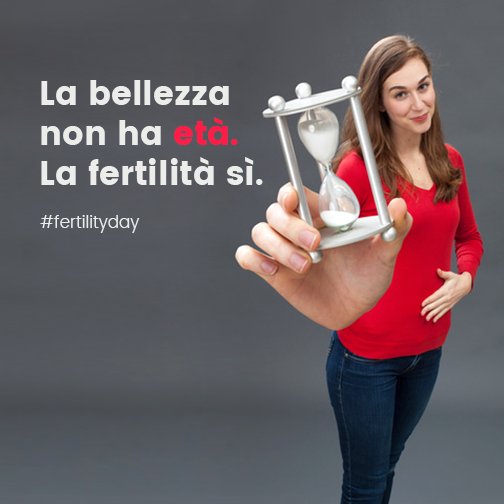
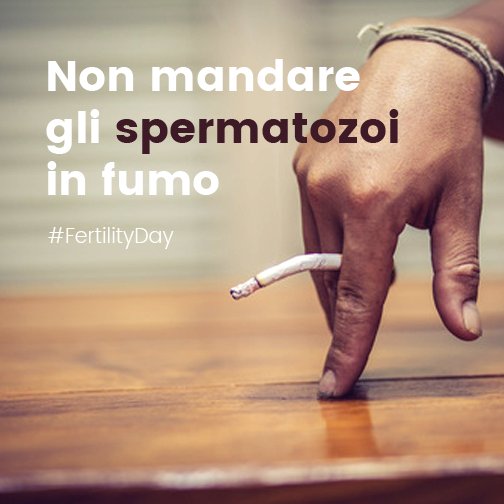
ROME — One ad pictured a woman holding an hourglass next to the words: “Beauty has no age limit. Fertility does.” Another portrayed a pair of baby shoes wrapped in a ribbon of the Italian flag. Yet another showed a man holding a half-burned cigarette: “Don’t let your sperm go up in smoke,” it read.
They were part of a government effort to promote “Fertility Day” on Sept. 22, a campaign intended to encourage Italians to have more babies. Instead, the ads set off a furor, were denounced as being offensive, and within days were withdrawn.
What they did succeed in doing, however, was to ignite a deeper and lasting debate about why it is that Italy has one of the lowest birthrates in the world, and what can be done about it.
The problem is not a lack of desire to have children, critics of the campaign say, but rather the lack of meaningful support provided by the government and many employers in a country where the family remains the primary source of child care.
“I should be a model for their campaign, and I still feel very offended,” said Vittoria Iacovella, 37, a journalist and mother of two girls, ages 10 and 8. “The government encourages us to have babies, and then the main welfare system in Italy is still the grandparents.”
Many working women, without an extended family to care for a child, face a dilemma, as private child care is expensive. Some also worry that their job security may be undermined by missing workdays because of child care issues. Many companies do not offer flexible hours for working mothers.
Not surprisingly, Italy’s long slowdown in childbirth has coincided with its recent economic slump. But Italian families have been shrinking for decades.
In 2015, 488,000 babies were born in Italy, the fewest since the country first unified in 1861. It has one of the lowest birthrates in Europe, with 1.37 children per woman, compared with a European average of 1.6, according to Eurostat figures.
By contrast, in France, the economy has been flat, too, but a family-oriented system provides a far more generous social safety net that includes day care and subsidies for families to have children. There, women have two children each on average.
“On paper, Italian women have equal rights,” said Tiziana Bartolini, the editor of Noi Donne, one of Italy’s most prominent feminist magazines. “But reality tells us a different story. Women are expected to care for children. If they live in regions where services are good, or in small towns, they keep their job. If they live in big, chaotic cities and have no family nearby, they are very prudent about becoming pregnant.
“Or they stop working,” she added.
The Ministry of Health began the fertility campaign on Aug. 31 with a group of online advertisements and a hashtag on Twitter. The goal was to publicize a series of public meetings on Fertility Day and encourage Italians to have more children.
Yeah, sure, thought Maria Scioli, 41, a teacher who depends on her family to care for her 15-month-old boy, when she spotted the debate on her Facebook page.

Even Prime Minister Matteo Renzi, whose own health minister started the campaign, distanced himself from the ads in a radio interview, noting ironically that none of his friends “had their kids after seeing an advert.”
“I’d love to have a second child,” Ms. Scioli said, “but my job situation worries me. And I even feel lucky. I think about all those women my age or younger that couldn’t have babies and had to watch that offensive ad.”
Mr. Renzi said that to increase the birthrate, structural issues like day care and services needed to be addressed.
Under Mr. Renzi, Italy’s government has tried to help families with a so-called baby bonus of 80 to 160 euros, or about $90 to $180, for low- and middle-income households, and it has approved labor laws giving more flexibility on parental leave. But Italy allocates only 1 percent of its gross domestic product to social protection benefits — half the European average. One child out of three here is at risk of relative poverty.
“Italy has a terrible combination: low birthrate, low women’s employment and high risk of child poverty,” said Alessandro Rosina, a professor of demography at Università Cattolica del Sacro Cuore in Milan. “On this path, Italy can only but have increasing costs for aging people, and increased public debt.”
“We defend our present, but can’t design the future,” Professor Rosina said.
Figures from Istat, the national statistics agency, show that Italian women with children are far less likely to work than mothers in other European countries, which provide greater social services.
In much of northern Europe, where social services are greater, about 70 percent of women work — and almost all of them continue to work after having children. By comparison, according to Eurostat, Italy has thesecond-lowest female employment rate in Europe, especially in the south.
“So many young women are even asked to presign a resignation letter here, especially in small companies,” said Teresa Potenza, a longtime women’s advocate in Naples, referring to a practice in which some women are asked to sign a resignation letter in case of pregnancy before they are hired. “Even to all those women, that campaign is a punch to the gut.”
“Without the ‘family welfare,’ I would have never been able to have children myself,” Ms. Potenza said.
Ms. Iacovella, the journalist, said her child’s kindergarten closed two hours before she got off work and noted that working mothers “are frustrated by the little help that Italy gives to women.”
She was so offended by the government advertisements that she vented her anger on Facebook soon after they started appearing, and her comments went viral online.
Italy’s health minister, Beatrice Lorenzin, responding on Facebook, wrote that the Fertility Day campaign was not a “call to reproduction” but a day to discuss “the fertility issues that 15 percent of Italians deal with.” She promptly canceled the campaign.
“I am saddened that the launch of the advertising campaign misled many people,” Ms. Lorenzin said. “I withdrew it to change it.”
article